
Carmel, IN
Whole-House Water Filtration in Carmel, IN, Treated at the Point of Entry
Houses off Allisonville Road and the newer streets out past 146th draw the same limestone-fed groundwater, and a single filter at the kitchen sink only ever solves a slice of it. We read the water first, size the tank to how many fixtures actually run at once, and tie in where your service line enters the house.
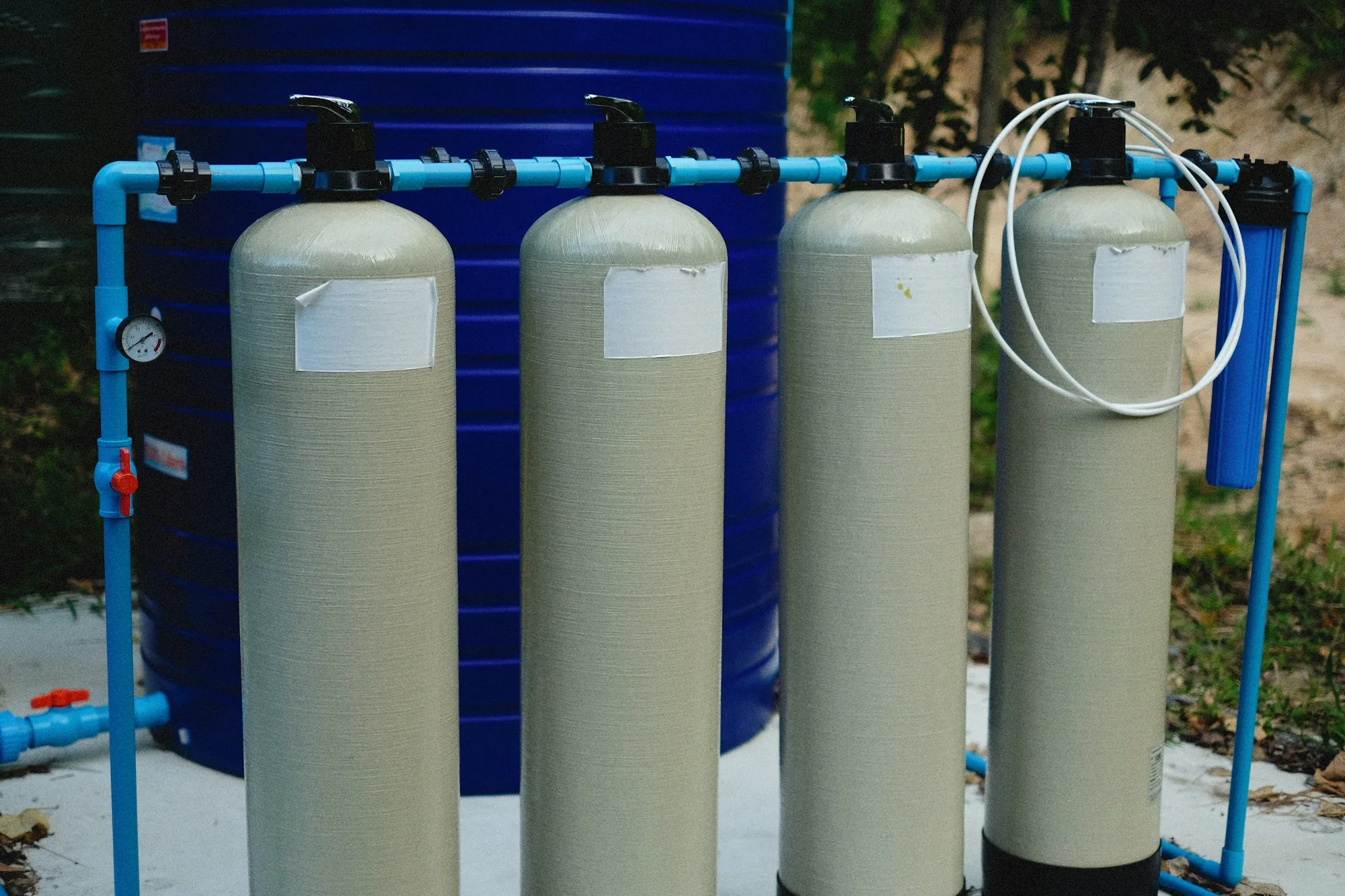
Point of entry
Whole-house filtration for Carmel water, from the main line outward
Central Indiana sits on limestone and dolomite, and groundwater working its way through that rock arrives at your meter already loaded with dissolved mineral, which is why the same cloudy glassware and crusted shower heads turn up in Midtown kitchens and in newer builds near the Village of WestClay alike.
A visit starts with a reading taken at an outside tap and a look at where your service line comes through the foundation, because the plumbing layout decides nearly as much about the right system as the water chemistry does. From there we size the tank, set the bypass, and write down the media schedule so nobody is guessing two winters from now. Most installations are finished and flushed within a single working day.
What a whole-home installation covers
Every system is built around one reading and one house, so the list below describes the work rather than a package. Nothing here is optional padding.
- Water read before sizing We measure hardness, iron, chlorine and sediment load at an outside tap before anything is quoted. A system sized off a guess either starves your flow or costs more than the house needs.
- Tie-in located correctly The point of entry goes in downstream of the meter or the well pressure tank, so every bathroom, laundry hookup and outdoor spigot sits behind it. If the kitchen gets treated water, so does the shower.
- Flow matched to fixture count A three-bath house running two showers and a dishwasher at seven in the morning needs more throughput than a ranch with one bath. We count fixtures before choosing tank diameter and media volume.
- Sediment stage set ahead Well homes north toward 146th and 161st Streets often push fine grit that grinds away at downstream media. A sediment stage goes in first and carries its own replacement interval.
- Backwash drain routed properly Backwashing units need a drain they can reach with a correct air gap, and we work that out against your existing floor drain or laundry standpipe. Improvised drain lines are how basements get wet.
- Bypass valve fitted A bypass lets the system come offline for service, or for filling a pool, without shutting water to the rest of the house. It also makes future media changes a short visit instead of a long one.
- Iron and sulfur handled on their own Orange staining in tubs and that sulfur smell in the laundry come from different sources than hardness. They get their own treatment stage rather than being loaded onto one cartridge that was never meant to carry them.
- Pressure verified at startup We read static and working pressure before leaving and compare it against what you had. A properly sized unit should cost you very little at the shower head.
- Media schedule put in writing You leave the visit knowing the media type, the expected service interval, and what the first sign of exhaustion looks like at the tap. Replacement stops being a surprise.
How the work runs
Three steps from first reading to first clean glass
The sequence is deliberately unhurried, because a system chosen in the first ten minutes is a system chosen badly.
We read the water
Someone comes out, pulls a sample from an outside tap, and measures hardness, iron, chlorine and sediment on the spot. You watch the readings come in rather than hearing about them later. If the house is on a private well out toward Sheridan or Cicero, we take longer over iron and sulfur, since those drive the design. The visit usually runs under an hour.
We size and quote it flat
The numbers from the reading, the fixture count and the condition of your service line decide tank size, media type and whether a sediment stage leads the way. You get one flat quoted price covering equipment, labor and startup, with the media schedule attached. Nothing shifts partway through the job. If the right answer is a smaller unit than you expected, that is what the quote says.
We install and flush
Installation day starts with water off at the main and the tie-in cut in downstream of the meter or pressure tank. The bypass goes on, the drain line gets its air gap, and the media bed is flushed until the discharge runs clear. Before we pack up we check working pressure at an upstairs fixture and walk you through the bypass handle. Most houses are back to normal service the same afternoon.
Why homeowners choose us
Why Carmel Water Filtration for a point-of-entry system
Whole-home work touches the plumbing that everything else depends on, so it is worth knowing how we approach it.
The line, not the symptom
Spotting on glassware and dull hair are the visible end of something happening at the main line. We treat the water where it enters rather than hanging filters on the fixtures that happen to be complaining loudest.
Sized against Hamilton County water
Limestone country produces a particular kind of hard, mineral-heavy water, and a tank sized for softer municipal supply elsewhere will exhaust early here. Sizing starts from your reading, not from a catalogue default.
We service what we install
The same outfit that cut in your bypass comes back for media changes and knows exactly what is in the tank. There is no handoff to a stranger holding a cartridge that may or may not fit.
- We read first Nothing gets quoted until we have measured what is actually coming out of your tap.
- Flat quoted pricing Equipment, labor and startup are priced together before work begins and stay there.
- Service after the sale Media changes and valve service come from the same people who did the installation.
- Scheduled, not rushed Work is booked at a time that suits the household rather than squeezed into a gap.
Next step
Start with a reading, then decide
If the scale on your fixtures keeps coming back no matter how often you scrub, the answer is upstream of the fixture. A short visit and a water reading will tell you what the house actually needs, and you are welcome to think it over afterwards. The office line is (317) 622-4157.
Serving Carmel and nearby Westfield, Zionsville, Fishers and Noblesville.