
Drinking water
Reverse Osmosis Systems in Carmel, IN, for Water You Can Taste the Difference In
What is actually left in the glass after water has crossed Hamilton County limestone and then run through municipal treatment on its way to Meridian Street? Reverse osmosis answers that question by pushing the water through a semipermeable membrane and sending what will not pass through down the drain.
How the membrane works
Reverse osmosis in Carmel kitchens, stage by stage
The membrane is the part that distinguishes this from everything else in the house. Water is pressed against a sheet with openings far smaller than anything in a cartridge, so dissolved mineral picked up from limestone and dolomite, along with much of what homeowners worry about under the heading of dissolved contamination, stays on the reject side and leaves through the drain line.
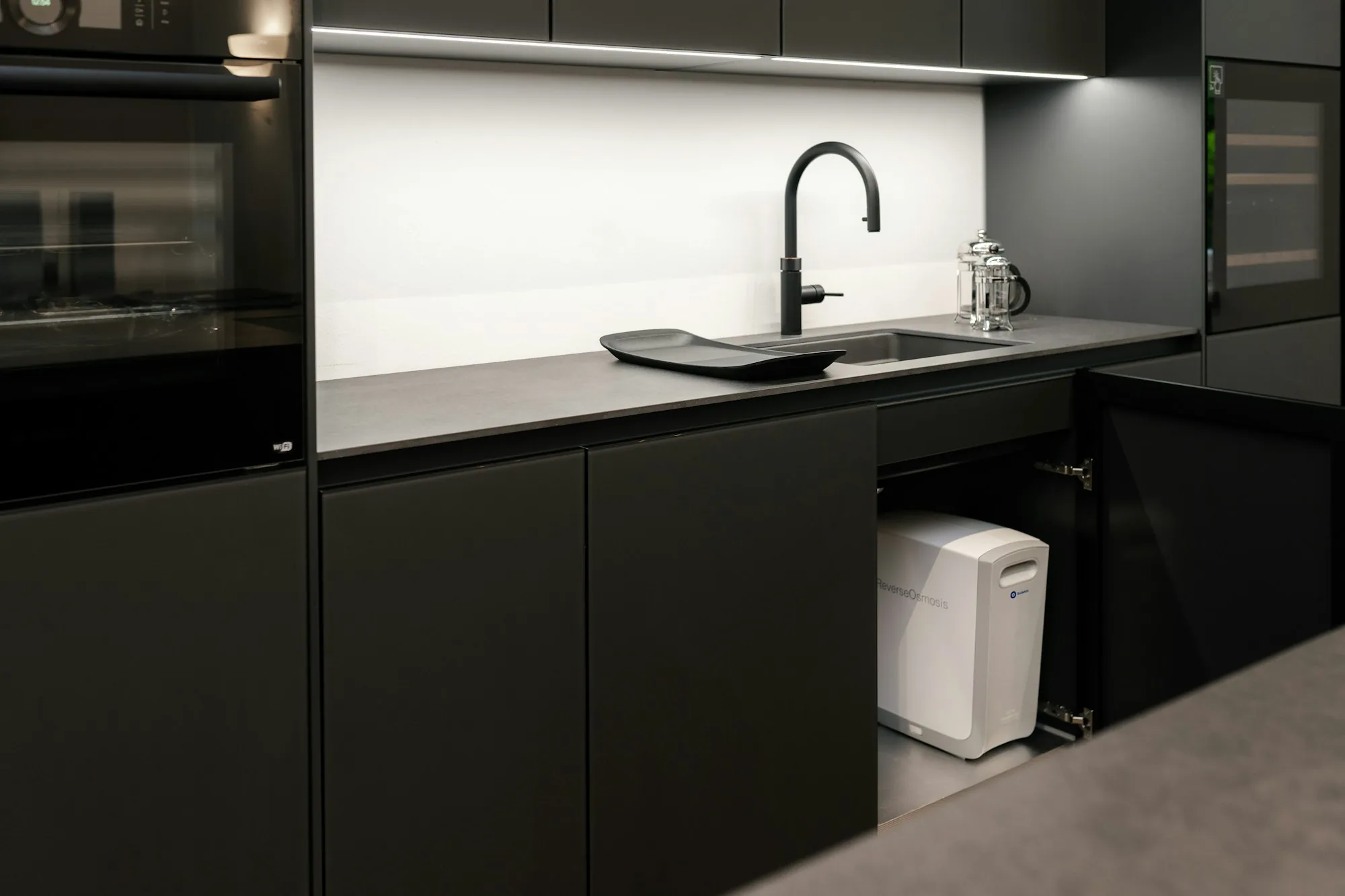
Families along Keystone Parkway and out toward Geist usually come to it after years of hauling bottled water home from the store, and the appeal is simple enough once the unit is under the sink. We size the membrane to your household pressure, add pre-filters that protect it from chlorine and sediment, and set up the storage tank so the dedicated faucet keeps up with a dinner party. The whole fitting is done inside the cabinet in an afternoon.
What goes into an RO installation
A membrane only performs as well as the stages around it. This is the work that keeps it performing.
- Incoming pressure measured Membranes are pressure-driven, and a house running low at the meter will produce slow, disappointing output no matter how good the element is. We read pressure before specifying anything and add a booster pump where the reading calls for it.
- Sediment pre-filter staged Grit and fine particulate would otherwise score the membrane surface and shorten its working life considerably. A sediment stage leads the train and takes that damage instead.
- Carbon pre-filter ahead of the membrane Chlorine and chloramine degrade common membrane material, so an activated carbon stage strips them first. This is the single most overlooked reason membranes fail early in homes on treated supply.
- Membrane sized to real use A household that fills water bottles and cooks from the tap needs more daily production than one that only fills a kettle. We match the element rating to what your kitchen actually draws.
- Storage tank set and pressurised RO produces slowly and stores what it makes, so the tank carries the air charge that delivers it. We set that charge at install and show you how to check it later.
- Dedicated faucet fitted neatly The product water gets its own faucet drilled into the sink deck or an existing soap dispenser hole, finished to match your fixtures rather than left looking like an afterthought.
- Drain saddle installed correctly Reject water needs a clean path into the waste line, positioned above the trap so nothing siphons back. A sloppy drain saddle is where RO gurgles and odors come from.
- Post-filter polish on the outlet A final carbon stage after the storage tank takes off any flat taste the tank may lend the water. It is a small stage that makes a surprising difference in the glass.
- Stage schedule handed over Pre-filters, post-filter and membrane all run on different intervals, and you leave knowing which is which. Nobody should have to guess which cartridge is due.
The visit
From pressure reading to first glass
Three stages of our own, each one finished before the next starts.
We read pressure and water chemistry
Before anything is proposed we measure household pressure and read the water for hardness, chlorine and dissolved solids. Those three numbers between them decide membrane choice, pre-filter selection and whether a pump belongs in the design. You will see where your water sits and what the membrane is expected to do with it. The reading takes well under an hour.
We lay out the stages and quote flat
You get the stage train written out in plain terms, so you know what each cartridge is for and what it is not for. The quote covers the unit, the faucet, the drain saddle, the tank and startup as one flat figure. Cabinet space and whether your sink deck has a spare hole both get settled at this point. There are no surprises waiting under the counter.
We install, flush and taste it
Installation happens inside the sink cabinet with the supply isolated, the faucet set in the deck, and the drain saddle fitted above the trap. The first tank of product water is flushed and discarded, as every new membrane requires, and then we draw a glass and taste it with you. We finish by labelling the stages with their intervals. Most kitchens are done in an afternoon.
Our approach
Why Carmel Water Filtration for reverse osmosis
RO is sold everywhere and understood in fewer places, which shows up a year later.
We protect the membrane
The expensive element lasts when the cheap stages ahead of it are doing their job. Our designs put sediment and carbon where they belong so you are not buying membranes on a schedule nobody warned you about.
Honest about what it leaves behind
Reverse osmosis produces reject water and removes beneficial mineral along with everything else, and it does nothing for the scale in your water heater. We say that before you buy rather than after.
Fitted for the kitchen you have
Cabinets under Carmel sinks are full of disposals, pull-out bins and whatever else. We plan the layout around what is already in there so the unit is serviceable without emptying the cupboard.
- We measure before specifying Pressure and dissolved solids are read at your sink before a system is chosen.
- Priced before we start Unit, faucet, drain work and startup are quoted together and stay at that figure.
- Stages explained plainly You will know what each cartridge does and when it is due before we leave.
- Same hands on service calls Membrane and cartridge changes come back to the same people who fitted the system.
Worth a conversation
Stop buying water by the case
If the recycling bin is full of bottles every week, a membrane under the kitchen sink is a straightforward fix with a long tail of savings behind it. We are happy to read your pressure and dissolved solids first so the recommendation has something behind it. You can reach the office on (317) 622-4157.
Fitting kitchens in Carmel, Westfield, Zionsville, Fishers and Noblesville.