
Media and contact time
Carbon Filtration Systems in Carmel, IN, Sized for the Contact Time Carbon Needs
Consider what happens inside the tank rather than at the faucet: water slows through a bed of activated carbon, and compounds carrying that chemical taste and swimming-pool smell bind to the media instead of continuing on to your kitchen. Homes on treated municipal supply along Michigan Road and across the 116th Street corridor are usually the ones asking about it.
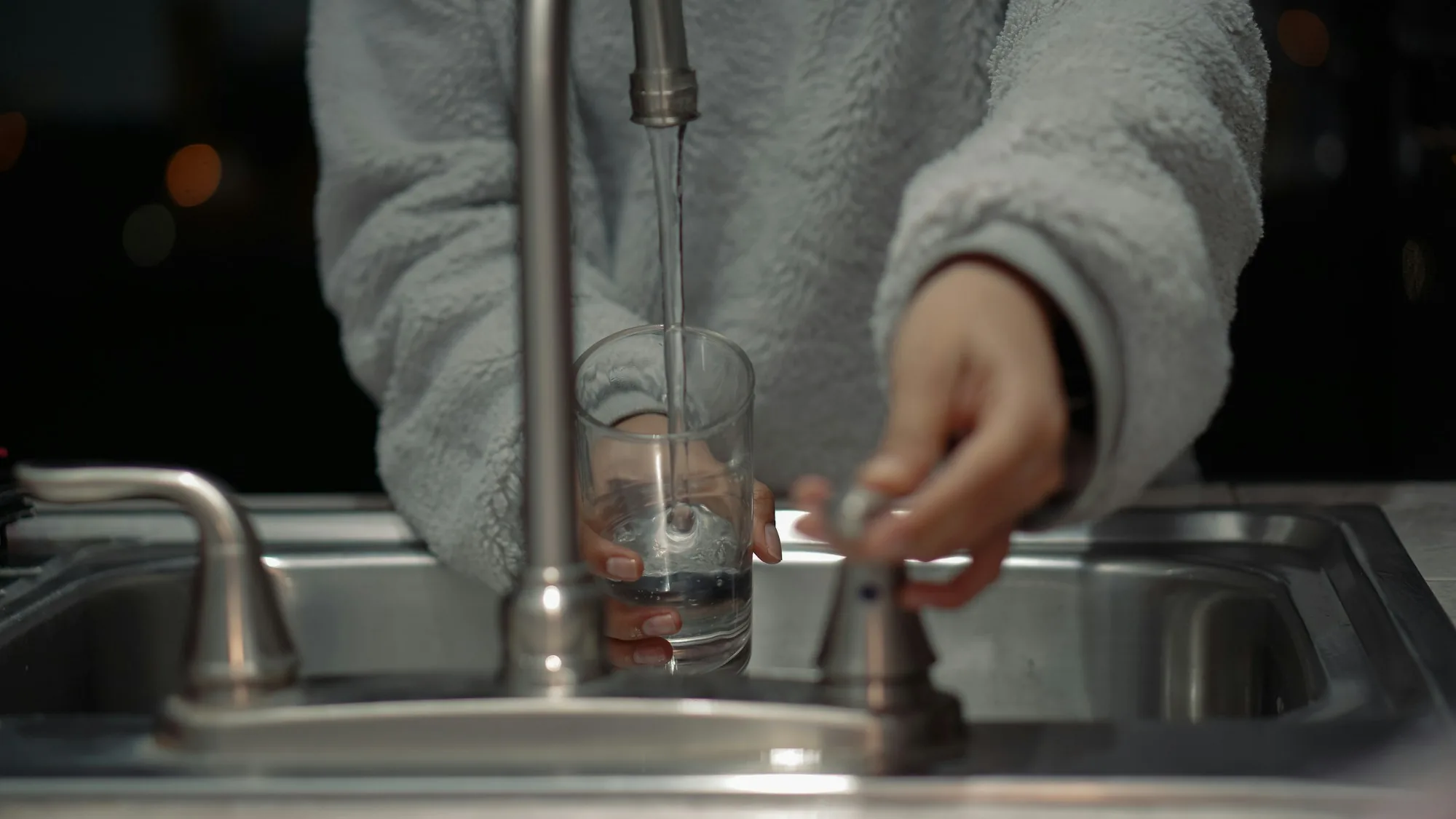
What carbon does
Carbon filtration for Carmel homes, and the honest limits of the media
Adsorption is the whole mechanism, and it is worth a minute of your attention. Activated carbon is riddled with pore structure that gives a modest volume of media an extraordinary amount of internal surface, and organic compounds, chlorine byproducts and the molecules behind taste and odor stick to that surface as water moves slowly past.
Here is where the honesty comes in. Carbon will not touch the calcium and magnesium that Hamilton County limestone puts into your water, so it leaves scale on the water heater exactly as it found it, and it is not the right tool for nitrates or for dissolved mineral generally. For chlorine and chloramine, for the musty taste that arrives in certain seasons, and for the chemical smell that follows a hot shower upstairs, carbon is the media the job calls for. We size the bed around flow and contact time, then tell you plainly where it stops.
What a carbon system involves
Carbon rewards sizing and punishes shortcuts, because a bed too small simply passes water through untouched. The following is where the attention goes.
- Disinfectant type identified Chlorine and chloramine behave very differently against carbon, and chloramine demands catalytic media with far more contact time. Finding out which one your supply carries is the first thing we do.
- Bed depth sized to flow The water needs to spend enough time in the media for adsorption to happen, so bed depth is calculated against your peak flow rather than chosen off a size chart.
- Media grade chosen deliberately Granular carbon, carbon block and catalytic carbon suit different jobs and different pressure losses. We match the grade to the compound you are trying to remove.
- Sediment stage ahead of the carbon Fine particulate packs into a carbon bed and channels the water around the media, which quietly ruins performance long before the carbon is spent. A sediment stage ahead of it prevents that.
- Point of entry or point of use decided If the complaint is only a glass of drinking water, a cartridge at the sink is enough, and if it is the smell of the shower, the system belongs at the point of entry. We settle that question before quoting.
- Backwash cycle configured Tank-style carbon systems backwash to lift and resettle the bed so it does not compact into a solid plug. The cycle timing is set against your household use at startup.
- Drain and air gap arranged Backwash discharge gets a routed drain line with a proper air gap, worked into the floor drain or standpipe you already have rather than left to find its own way.
- Carbon paired with the right partner Where hardness is also a complaint, carbon goes in alongside a softener rather than instead of one, and the order of the two matters. We plumb them in the sequence that protects both.
- Media life estimated for your household Carbon exhausts quietly, with no change in flow to warn you, so you get a realistic replacement window based on your water and your usage. Taste returning is the late signal, not the first one.
Our sequence
Three steps to water that stops smelling of the treatment plant
Nothing is specified before the water has been read.
Reading the disinfectant and the flow
We measure what is in your water and establish whether the supply carries chlorine or chloramine, because that single answer changes the media and roughly doubles the contact time needed. At the same time we work out peak household flow from fixture count. You see both figures and what they imply for bed size. The visit is short and there is no obligation attached to it.
Specifying the bed and quoting it
Media grade, bed depth, tank size and placement all follow from the reading, and we write the reasoning out rather than handing you a model number. The quote covers media, tank, valve, drain work and startup as one flat price. Where carbon alone will not solve the complaint, the quote says what else is needed and what it would cost. You are free to take only part of it.
Installing and settling the bed
The tank is set, the media loaded and the valve programmed, then the bed is backwashed until the discharge runs clean of carbon fines. That first backwash matters, since unsettled media will otherwise find its way to a faucet aerator. We check flow and taste before leaving and note the replacement window on the tank. Allow most of a morning.
Our view
Why Carmel Water Filtration for carbon media
Carbon is the most oversold media in this trade and the most frequently undersized.
Contact time over tank size
A big tank with the wrong media grade and too fast a flow will disappoint you, and a correctly sized bed will not. We work from contact time first and let the hardware follow.
Chloramine taken seriously
Supply treated with chloramine will walk straight through standard carbon that handles chlorine perfectly well. Identifying it up front is the difference between a system that works and one that quietly does nothing.
Clear about the boundary
Carbon handles taste, odor and chlorine chemistry, and it leaves limestone hardness entirely alone. Knowing where that line sits is how you avoid paying twice for the same complaint.
- Media sized, not guessed Bed depth and grade come from your flow and disinfectant reading every time.
- Quoted flat, start to finish Media, tank, drain work and startup are quoted as one figure before the work starts.
- Limits stated upfront We tell you what carbon will not do before you spend anything on it.
- We look after our own work Media replacement and valve work come back to the people who sized the bed.
Where to begin
Find out which disinfectant you are dealing with
Taste and smell complaints are the easiest water problems to fix and the easiest to get wrong, and it nearly always comes down to chlorine against chloramine. One short reading settles it and points at the right media. You will find us on (317) 622-4157.
Covering Carmel plus Westfield, Zionsville, Fishers and Noblesville.